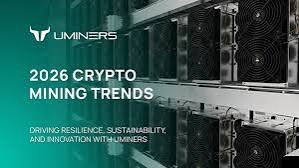

Cryptocurrency mining continues to evolve as new technologies reshape the digital asset industry. Mining equipment has become more powerful, energy-efficient, and technologically advanced than ever before. As blockchain networks grow and competition increases, miners must understand emerging hardware trends to make informed investment decisions.
In 2026, cryptocurrency mining is no longer simply about purchasing machines with the highest processing power. Electricity consumption, cooling technology, equipment reliability, and operational costs are equally important. Mining companies and individual operators are exploring innovative solutions to improve efficiency while maintaining sustainable operations.
Leading manufacturers such as Bitmain, MicroBT, and Goldshell continue developing specialized mining equipment for different cryptocurrencies and mining algorithms. Their technologies demonstrate how the industry is moving toward improved hardware performance and more sophisticated infrastructure.
This article explores the most important cryptocurrency mining hardware trends in 2026, explains how modern mining machines are changing, and highlights the factors that may influence the future of digital currency mining.
The Evolution of Cryptocurrency Mining Hardware
Cryptocurrency mining hardware has experienced significant technological changes since Bitcoin was introduced. During Bitcoin’s early years, ordinary computer processors were sufficient to participate in mining activities. However, increasing network competition created demand for more powerful equipment.
Graphics processing units later became popular because they could perform many calculations simultaneously. Eventually, specialized mining machines known as Application-Specific Integrated Circuits, or ASICs, transformed the industry.
ASIC miners are designed to perform particular computational tasks with greater efficiency than general-purpose hardware. For Bitcoin, these machines focus on the SHA-256 hashing algorithm used by its proof-of-work system.
Modern mining equipment offers substantially higher hash rates than earlier generations while using advanced chip designs and improved cooling technology.
However, hardware improvements have also increased competition. As more computational power enters a network, mining difficulty may rise, affecting potential rewards.
Understanding this evolution helps miners recognize why equipment efficiency and long-term operating costs matter more than simply purchasing powerful machines.
Advanced ASIC Technology Is Leading the Industry
ASIC technology remains one of the most important developments in cryptocurrency mining. These specialized machines are designed to perform mining calculations efficiently, making them essential for competitive Bitcoin mining operations.
Manufacturers continue working to improve ASIC chip architecture, computational performance, and energy consumption.
Modern ASIC equipment can perform trillions of calculations every second, providing significantly more processing power than conventional computer hardware.
However, the effectiveness of a mining machine depends on more than its advertised hash rate. Energy efficiency, cooling requirements, and hardware reliability also influence overall performance.
When exploring an asic miner for sale, buyers should compare processing capabilities, electricity requirements, supported algorithms, and manufacturer specifications.
Different cryptocurrencies use different mining algorithms, meaning a machine designed for one network may not support another.
As ASIC technology develops, manufacturers are expected to continue prioritizing efficient chip designs and improved operational stability.
These developments could help miners reduce electricity consumption per unit of computational work while maintaining competitive performance.
Energy Efficiency Is Becoming a Major Priority
Electricity consumption remains one of the largest expenses associated with cryptocurrency mining. Mining machines frequently operate continuously, making energy efficiency an essential consideration.
In 2026, miners increasingly evaluate equipment using efficiency measurements rather than focusing exclusively on maximum hash rate.
Bitcoin mining efficiency is commonly expressed in joules per terahash, abbreviated as J/TH. This measurement indicates how much energy a machine requires to perform a given amount of computational work.
Lower J/TH values generally indicate more efficient hardware.
Manufacturers are improving chip designs, power management systems, and cooling configurations to reduce energy consumption relative to processing performance.
These improvements can make a significant difference for large mining facilities operating hundreds or thousands of machines.
However, efficient hardware does not automatically guarantee profitability. Electricity prices, mining difficulty, equipment costs, and cryptocurrency market conditions remain important.
Miners should calculate their expected energy expenses before purchasing new equipment.
Choosing efficient machines can help improve operational flexibility and reduce exposure to rising electricity costs.
Bitmain Antminer and the Development of High-Performance Equipment
Bitmain Antminer remains a recognized product line in the cryptocurrency mining hardware market. Bitmain manufactures specialized mining machines designed for different algorithms and operational environments.
Its Bitcoin-compatible equipment uses ASIC technology to perform SHA-256 calculations.
Over successive hardware generations, Antminer machines have introduced improvements in processing power, energy efficiency, and thermal management.
Some models use conventional air-cooling systems, while others are designed for hydro-cooled installations.
These different configurations allow mining operators to select equipment based on available infrastructure and operational requirements.
High-performance mining facilities may prioritize equipment density and advanced cooling, while smaller operations often focus on manageable installation requirements.
However, buyers should carefully compare individual Antminer models because specifications differ significantly between generations.
Purchase price, electricity consumption, warranty coverage, and maintenance requirements all influence long-term ownership costs.
The continued development of specialized mining equipment demonstrates how manufacturers are responding to increasing competition and demand for more efficient cryptocurrency mining solutions.
Whatsminer and the Focus on Reliable Mining Operations
Whatsminer, manufactured by MicroBT, is another prominent mining hardware product line used in Bitcoin mining operations.
Its equipment is designed to perform continuous SHA-256 mining calculations using specialized ASIC technology.
Whatsminer machines are available in different performance categories, allowing operators to evaluate equipment according to their computing requirements and electricity budgets.
Modern mining facilities place considerable importance on hardware stability because unexpected downtime can reduce productive operating hours.
Mining equipment must also withstand demanding conditions, including continuous workloads and significant heat generation.
Whatsminer hardware development reflects the industry’s broader focus on efficiency, reliability, and improved cooling technology.
However, actual machine performance depends on the specific model, operating conditions, and maintenance practices.
Buyers should review manufacturer documentation and independent testing information rather than assuming that one product line consistently outperforms another.
As mining operations become more sophisticated, dependable hardware and effective monitoring systems will remain important for managing long-term operating costs.
Goldshell and Specialized Cryptocurrency Mining Equipment
Goldshell is another manufacturer contributing to the development of specialized cryptocurrency mining hardware.
Unlike equipment designed exclusively for Bitcoin, many Goldshell machines support mining algorithms associated with alternative cryptocurrencies.
This makes algorithm compatibility particularly important when evaluating its products.
Goldshell offers mining equipment across different product categories, including machines designed for particular operational environments and computing requirements.
Some models are intended for users seeking comparatively compact mining equipment, although noise, electricity consumption, and cooling requirements vary.
The growing diversity of mining hardware reflects the different technical needs of proof-of-work cryptocurrency networks.
However, not every cryptocurrency supports ASIC mining, and some networks use consensus mechanisms that do not involve mining at all.
Before purchasing Goldshell equipment, buyers should verify which cryptocurrencies and algorithms the selected model supports.
They should also evaluate expected operating expenses, network conditions, and equipment availability.
Specialized mining machines can offer strong computational efficiency for supported algorithms, but their usefulness depends on the future conditions of those particular networks.
Liquid Cooling and Immersion Cooling Technology
Cooling technology is becoming increasingly important as mining machines deliver greater processing power and generate substantial heat.
Traditional air-cooled miners use fans to move air through internal components. These systems are widely used but may create considerable noise and require effective ventilation.
Liquid cooling provides another approach to thermal management.
Hydro-cooled mining machines transfer heat through liquid-based cooling systems connected to suitable infrastructure.
Immersion cooling takes a different approach by placing compatible equipment in specially designed dielectric fluids that help remove heat.
These technologies can support high-density mining operations when properly engineered and maintained.
However, advanced cooling systems require additional investment, technical expertise, and maintenance planning.
They are not automatically more economical for every mining operation.
Smaller miners may find conventional air cooling more practical, while larger facilities may benefit from evaluating alternative cooling solutions.
The future of mining infrastructure will likely involve different cooling technologies selected according to facility size, climate, energy costs, and operational requirements.
Renewable Energy and Sustainable Mining Operations
Energy sourcing is becoming an increasingly important consideration for cryptocurrency mining operators.
Mining equipment requires substantial electricity, encouraging businesses to explore energy arrangements that can reduce costs and improve operational flexibility.
Some mining facilities use electricity generated from hydroelectric, solar, wind, or other renewable energy sources.
Others investigate opportunities involving surplus or otherwise underutilized electricity.
However, renewable energy does not automatically make mining environmentally sustainable. Environmental outcomes depend on factors such as energy availability, equipment manufacturing, local electricity demand, and the broader power system.
Miners must also consider the reliability of their energy supply.
Solar and wind generation can vary with weather conditions, creating challenges for operations that depend on continuous electricity.
Energy storage, flexible mining schedules, and grid-connected arrangements may help address some of these challenges.
In the coming years, energy management could become an increasingly important competitive factor alongside mining hardware efficiency.
Artificial Intelligence and Automated Mining Management
Automation is changing how cryptocurrency mining facilities monitor equipment and manage daily operations.
Modern mining management systems can collect information about hash rates, machine temperatures, electricity consumption, and hardware availability.
Automated alerts help operators identify unusual performance conditions before they develop into serious technical problems.
Artificial intelligence and machine learning may also support predictive maintenance by analyzing equipment data and identifying patterns associated with potential failures.
For example, monitoring systems can examine temperature fluctuations, fan behavior, and changes in computational performance.
However, these technologies require reliable data and appropriate technical implementation.
Automated systems cannot eliminate hardware failures or guarantee improved mining profitability.
Their primary value lies in helping operators make faster, better-informed maintenance and operational decisions.
As mining facilities grow larger, centralized monitoring and intelligent management tools may become increasingly useful.
Smaller mining operations can also benefit from basic remote monitoring, automated notifications, and performance reporting.
The Growing Importance of Mining Hardware Profitability
Mining profitability remains one of the most important considerations when purchasing equipment.
Even the best bitcoin miner cannot guarantee positive financial returns because cryptocurrency mining involves changing market and network conditions.
Potential earnings depend on factors such as computational performance, mining difficulty, transaction fees, cryptocurrency prices, and electricity expenses.
Hardware purchase costs and maintenance requirements also affect financial outcomes.
Before investing, miners should estimate expected daily revenue and subtract electricity, cooling, mining pool fees, and other operating expenses.
They should also consider how long it might take to recover the initial equipment investment.
Online mining calculators can provide estimates, but these calculations depend on assumptions that may change.
For example, rising network difficulty can reduce the expected output of an individual machine, even when its hash rate remains constant.
Long-term mining plans should therefore include conservative financial scenarios and regular performance reviews.
Equipment efficiency is valuable, but disciplined financial planning is equally important for sustainable operations.
Modular Mining Facilities and Scalable Infrastructure
Another developing trend involves modular cryptocurrency mining infrastructure.
Instead of constructing large permanent facilities immediately, some operators use modular units or container-based mining systems.
These installations can provide dedicated space for mining equipment, cooling systems, electrical distribution, and monitoring technology.
Modular infrastructure may allow operators to expand capacity in stages as their requirements change.
It can also support deployment in locations with access to suitable electricity resources.
However, modular systems still require careful engineering, reliable electrical connections, fire safety measures, and compliance with applicable regulations.
Installation costs can vary significantly depending on climate, power availability, and cooling requirements.
For large mining businesses, scalability is an important consideration because equipment generations and network conditions change over time.
Flexible infrastructure can make future upgrades easier, although the financial benefits depend on the individual project.
As mining operations continue to develop, infrastructure planning will remain an essential part of long-term equipment management.
Important Challenges Facing Cryptocurrency Miners in 2026
Despite improvements in mining technology, the cryptocurrency mining industry continues to face several challenges.
One major challenge is increasing competition. As network hash rates change, miners may need to reassess their equipment efficiency and operating costs.
Electricity pricing is another concern, particularly in regions where energy costs are high or supply is unreliable.
Hardware depreciation can also affect mining businesses. New equipment generations may provide better efficiency, reducing the competitiveness of older machines.
Regulatory requirements vary between countries and regions. Operators may need to consider electricity rules, business licensing, taxation, and environmental regulations.
Cryptocurrency price volatility introduces additional financial uncertainty.
Even efficient mining equipment may struggle to generate positive operating margins during unfavorable market conditions.
Equipment maintenance, cooling infrastructure, and access to replacement parts can create further challenges.
Successful operators should evaluate these risks carefully and maintain realistic expectations about future mining performance.
What the Future Holds for Cryptocurrency Mining Hardware
The future of cryptocurrency mining hardware will likely be shaped by improvements in chip efficiency, cooling technology, automation, and energy management.
Manufacturers are expected to continue competing on computational performance and electricity efficiency.
Mining operators may increasingly prioritize equipment that delivers dependable performance while minimizing long-term operating expenses.
Advanced monitoring tools could also improve equipment management by providing more detailed operational information.
At the same time, renewable energy arrangements and flexible electricity consumption may become important considerations for certain mining facilities.
However, predicting the exact direction of mining technology remains difficult.
Market conditions, network difficulty, cryptocurrency regulations, and manufacturing developments can all influence future investment decisions.
Miners should avoid assuming that every new machine will provide better financial returns.
Instead, purchasing decisions should be based on verified technical specifications, realistic operating costs, and careful financial analysis.
Conclusion
Cryptocurrency mining in 2026 is increasingly influenced by technological efficiency, infrastructure quality, and responsible financial planning.
Advanced ASIC chips, improved cooling systems, automated monitoring, and energy management technologies are shaping how mining equipment is developed and operated.
Manufacturers such as Bitmain, MicroBT, and Goldshell continue offering specialized hardware for different mining requirements.
However, successful mining depends on more than selecting a recognized manufacturer.
Buyers must consider electricity consumption, hardware compatibility, maintenance requirements, purchase prices, and changing network conditions.
As the industry continues to evolve, miners who prioritize reliable equipment and realistic operating budgets will be better positioned to adapt.
Understanding emerging hardware trends can help individuals and businesses make informed decisions while preparing for the changing demands of cryptocurrency mining.