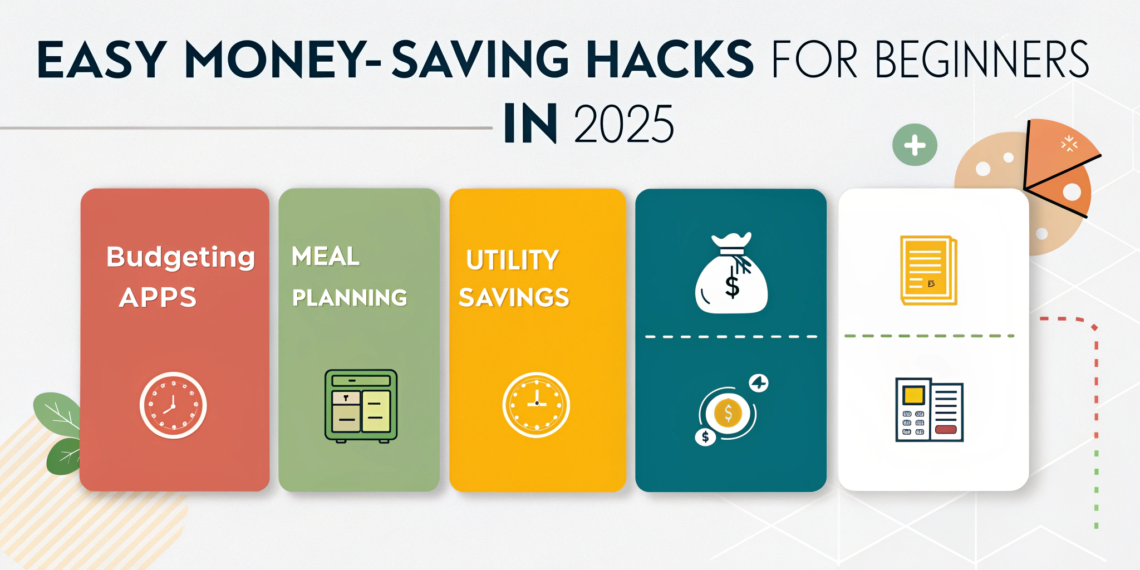

Introduction
Saving money doesn’t have to be complicated or require a large income. In 2025, with rising costs and more digital spending options, adopting smart money-saving hacks can make a significant difference in your financial health. Small, consistent actions can add up to hundreds or even thousands of dollars over a year. This guide provides easy, beginner-friendly money-saving hacks you can implement immediately, from cutting unnecessary subscriptions to smart grocery shopping, cashback strategies, and leveraging technology for better financial habits. I’ve personally seen beginners transform their savings by following a few simple tricks consistently, without compromising their lifestyle. By applying these hacks, you can free up cash, reduce financial stress, and make steady progress toward your financial goals in 2025 and beyond.
Hack 1 – Track Your Expenses Regularly
- Use budgeting apps, spreadsheets, or a simple notebook
- Identify unnecessary or duplicate spending
- Helps pinpoint areas to cut back
Example:
Ali discovered he was spending $50/month on coffee delivery. Switching to homemade coffee saved $600/year.
Tip: Track expenses for 30 days first to understand spending patterns.
Hack 2 – Cancel Unused Subscriptions
- Review streaming, software, and app subscriptions monthly
- Cancel or downgrade unused services
- Consider sharing subscriptions with family or friends
Mini Case Study:
Lina canceled 3 unused subscriptions and saved $45/month, totaling $540/year.
Hack 3 – Use Cashback and Rewards Programs
- Leverage cashback credit cards responsibly
- Use cashback apps for online and in-store purchases
- Combine with budgeting to maximize benefits
Example:
Tom earned $120 in cashback over 6 months without extra spending.
Hack 4 – Buy in Bulk and Shop Smart
- Purchase non-perishable items in bulk to reduce unit cost
- Compare prices online and use coupons or discounts
- Plan grocery trips to avoid impulse buying
Tip: Create a shopping list and stick to it to save both money and time.
Hack 5 – Automate Savings
- Set up automatic transfers to savings accounts
- Start small, even $10–$20/week
- Treat savings as a non-negotiable expense
Example:
Maria automated $50/week; in one year, she saved $2,600 without effort.
Hack 6 – Reduce Utility Bills
- Switch to energy-efficient appliances
- Turn off lights and electronics when not in use
- Compare internet, mobile, and insurance providers for better deals
Mini Tip: Simple behavioral changes like shorter showers or unplugging devices can save $100–$200/year.
Hack 7 – Avoid Impulse Purchases
- Use the 30-day rule for non-essential items
- Make wishlists for planned purchases
- Avoid “buy now” offers unless necessary
Example:
Ali planned his tech purchase for 1 month and found a 15% cheaper price later.
Hack 8 – Leverage Student/Beginner Discounts
- Many services, apps, and retailers offer student or first-time user discounts
- Always check for promo codes before online purchases
- Combine discounts with cashback for maximum savings
Common Mistakes to Avoid
- Trying to save too much at once and burning out
- Ignoring small recurring expenses
- Not using technology to track savings
- Relying on memory rather than recording spending
- Neglecting long-term financial goals
FAQs (Schema-Ready)
Q1: What are easy money-saving hacks for beginners?
A: Track expenses, cancel unused subscriptions, use cashback, shop smart, automate savings, and reduce utilities.
Q2: How much can I save using these hacks?
A: Beginners can save $500–$2,000 annually depending on spending habits and consistency.
Q3: Are small savings worth tracking?
A: Yes, small amounts add up over time and improve financial awareness.
Q4: Can I save money without changing my lifestyle?
A: Absolutely. Many hacks optimize spending rather than cut essential activities.
Q5: Should I automate savings even if my income is low?
A: Yes, even small automated transfers create discipline and build savings over time.
Internal & External Links
Internal:
- Personal Finance Basics for Beginners
- How to Create a Monthly Budget in 2025
- Top Saving Strategies in 2025
External: