
Introduction
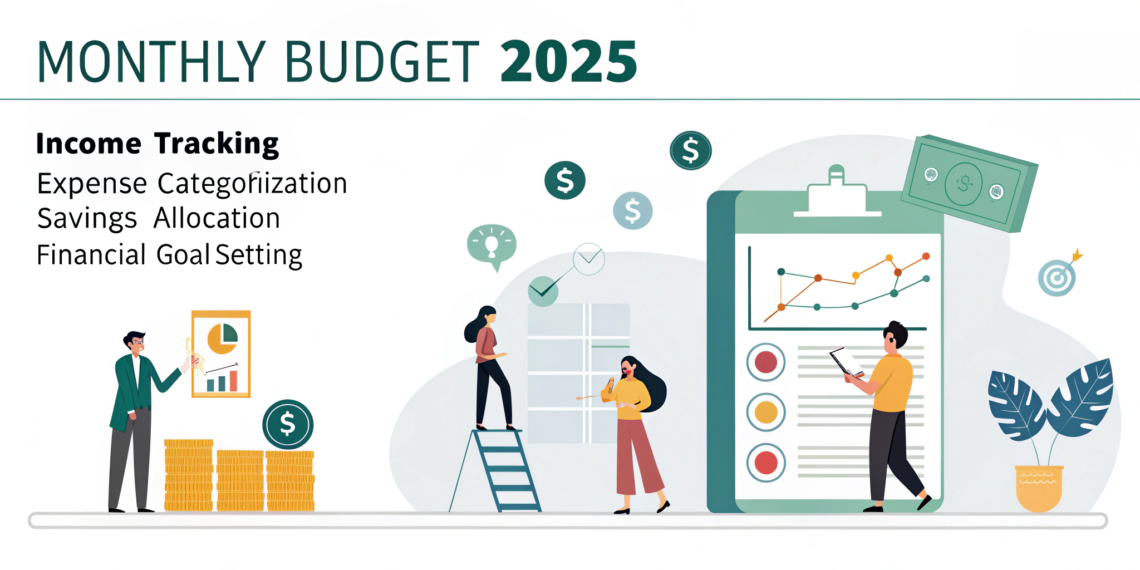
Monthly Budget planning is essential for managing your finances effectively and achieving your financial goals in 2025. Creating a well-structured monthly budget helps you track your income, control spending, and save for the future with confidence. In this guide, we’ll explore practical tips, budgeting strategies, and tools that make it easy to stay on top of your money each month. By following these steps, you can take control of your finances, reduce financial stress, and build a stronger foundation for long-term financial success.A monthly budget is the cornerstone of personal finance. It allows you to understand where your money goes, control spending, and build savings. In 2025, with rising living costs and digital subscriptions everywhere, creating a budget is more important than ever. This guide will take you step by step through creating a monthly budget that works, whether you’re a student, freelancer, or full-time professional. You’ll learn practical tips, real-world examples, and mistakes to avoid. By following this system, you can take control of your finances, reduce stress, and make money work for you rather than feeling like it disappears before you know it. Even small adjustments can lead to significant savings over time.
Step 1 – Track Your Income and Expenses
List all sources of income: salary, side hustles, investments
Record fixed expenses: rent, utilities, subscriptions
Record variable expenses: groceries, transport, entertainment
Example:
Ali earns $1,200/month. Fixed expenses are $700, variable expenses $300, leaving $200 for savings or goals.
Tip: Use apps like Mint, YNAB, or spreadsheets for accuracy.
Step 2 – Choose a Budgeting Method
50/30/20 Rule
50% needs, 30% wants, 20% savings
Zero-Based Budget
Assign every dollar a purpose, including savings
Envelope Method
Cash-based budgeting to control discretionary spending
Mini Case Study:
Sara switched to the zero-based method and saved $150/month without reducing lifestyle quality.
Step 3 – Set Realistic Spending Limits
Avoid overly strict budgets
Prioritize essentials first
Allocate some money for “fun” to stay motivated
Tip: Regularly review and adjust monthly.
Step 4 – Automate Savings
Schedule automatic transfers to savings or investment accounts
Even $20/week adds up over time
Example:
Tom automated $50/week to his emergency fund; in one year, he saved $2,600 without noticing.
Step 5 – Monitor and Adjust
Track spending weekly
Compare actual vs budgeted
Adjust for unexpected expenses
Common Mistake: Ignoring overspending and not adjusting the plan.
Step 6 – Use Tools and Apps
Apps: Mint, PocketGuard, YNAB
Spreadsheets: Google Sheets or Excel templates
Bank alerts: Monitor large expenses and subscriptions
Tip: Choose a tool you’ll actually use consistently.
Real-World Example: A Beginner’s Monthly Budget
| Category | Budgeted Amount | Actual Amount |
| Rent & Utilities | $500 | $500 |
| Groceries | $200 | $180 |
| Transportation | $100 | $110 |
| Subscriptions | $50 | $60 |
| Savings | $150 | $150 |
| Entertainment | $100 | $90 |
| Total | $1,100 | $1,090 |
Tip: Small adjustments can free up $50–$100/month for extra savings or debt repayment.
Common Mistakes to Avoid
Ignoring variable expenses
Setting unrealistic limits
Not tracking spending consistently
Forgetting debt repayment and savings
Comparing your budget with others
FAQs (Schema-Ready)
Q1: How do I create a monthly budget for beginners?
A: Track income and expenses, choose a budgeting method, set realistic limits, automate savings, and adjust monthly.
Q2: Which budgeting method works best for beginners?
A: 50/30/20 is simple and effective for most beginners.
Q3: Can I stick to a budget if I have irregular income?
A: Yes, use an average monthly income and focus on covering essentials first.
Q4: How often should I review my budget?
A: Weekly or monthly. Adjust based on expenses and goals.
Q5: Do I need special software to budget?
A: No. Spreadsheets or even pen-and-paper work, but apps make tracking easier.
Internal & External Links
Internal:
Personal Finance Basics for Beginners in 2025
External: